

The Cawood Sword
Mystery surrounds this Viking sword which has survived virtually intact for nearly 1,000 years.
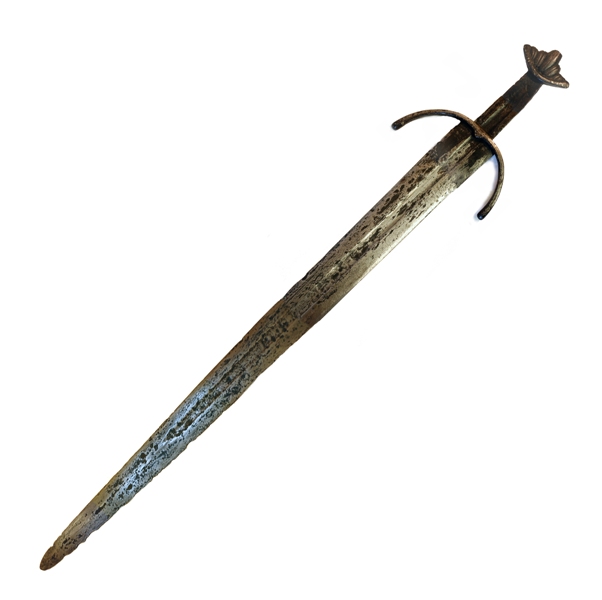
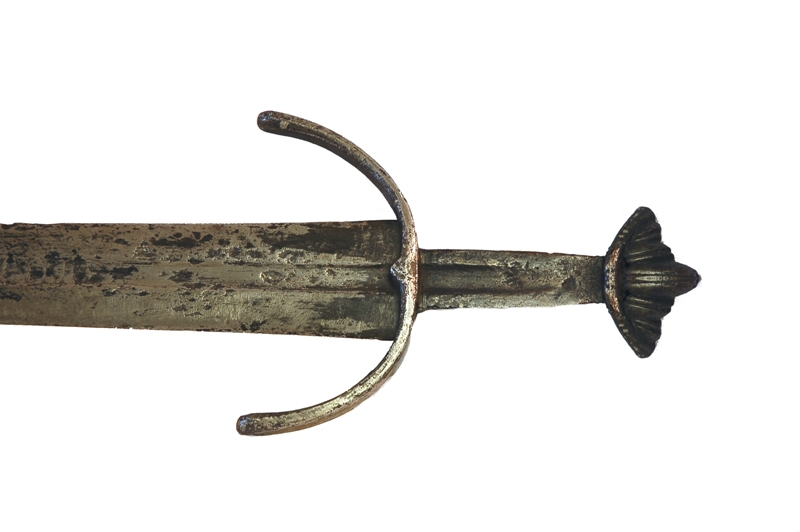

The Cawood Sword is only the fifth sword of its type to be found and is by far the best preserved.
It was discovered in the River Ouse, near Cawood Castle, North Yorkshire, in the late 1800s and its condition is so good that some strange wording can still be seen along its blade.
There are capital letters from the Roman alphabet on one side and from the Lombardic alphabet on the other, but they do not spell any known words.
Archaeologists believe the words make up a religious phrase to give the sword’s owner extra strength in battle.
The sword dates from 1100, the end of the Viking period and the beginning of the Medieval period, and is very similar to another sword found in Norway, which has Runes written down its blade, a Viking language.
Mystery also surrounds how the sword ended up in the river. Cawood Castle was the summer palace for the Archbishop of York and in earlier times was a Viking lord’s manor house.
Please note: The Yorkshire Museum is home to an extensive and varied collection of items and artefacts. Whilst we make every effort to display a broad spectrum of our collections it is not always possible for all our collections to be on display at once.
Latest News
- From public campaign to national award: Yorkshire Museum celebrates Melsonby Hoard success
- Yorkshire’s link to the Bayeux Tapestry highlighted in weekend celebration.
- Looking for something fun to do before back to school? The Yorkshire Museum has the answer!
- Dinosaurs, Fossils, Romans and more, everything the Yorkshire Museum has in store for summer 2026.
- The Duke of Gloucester visits nationally significant Melsonby Hoard exhibition at the Yorkshire Museum.
